






Dermatologist Recommended Skin Care: A Complete Guide for Healthy, Glowing Skin
Random products or viral trends do not achieve healthy and glowing. True skin health comes from science-backed routines and expert advice. This is why dermatologists recommend skin care is considered the safest and most effective approach for all skin types.
Dermatologists are trained medical experts who understand how skin functions, how conditions develop, and which ingredients actually work. In this detailed guide, we will explain skin lore, why expert-approved routines matter, what steps you should follow daily, and how to choose products wisely.

Why Dermatologist Recommended Skin Care Matters
Many people experiment with new products without understanding their skin type. This often leads to acne, irritation, pigmentation, or premature aging. Dermatologist recommended skin care focuses on prevention, protection, and long-term results instead of quick fixes.
Dermatologists evaluate:
-
Skin type (oily, dry, combination, sensitive)
-
Skin concerns (acne, aging, pigmentation, rosacea)
-
Environmental damage
-
Lifestyle factors
By following expert guidance, you reduce the risk of skin damage and improve overall skin health safely.
Understanding Your Skin Type
Before starting any routine, understanding your skin type is essential. Dermatologist recommended skin care always begins with proper skin assessment.
Common Skin Types
-
Oily Skin: Excess oil, prone to acne
-
Dry Skin: Flaky, tight, dull appearance
-
Combination Skin: Oily T-zone, dry cheeks
-
Sensitive Skin: Redness, burning, irritation
Using products not designed for your skin type can damage your skin barrier and worsen problems.
Basic Steps in Dermatologist Recommended Skin Care Routine
A simple and consistent routine works better than complicated regimens. Dermatologist recommended skin care usually includes the following essential steps.

1. Gentle Cleansing
Cleansing removes dirt, oil, makeup, and pollutants. Dermatologists advise washing your face twice daily using a mild, sulfate-free cleanser.
Avoid harsh scrubs and strong soaps, as they damage the skin barrier.
2. Moisturizing Daily
Moisturizers are not only for dry skin. Even oily skin needs hydration. Dermatologist recommended skin care emphasizes moisturizing to maintain skin balance and prevent excess oil production.
Choose:
-
Gel-based moisturizers for oily skin
-
Cream-based moisturizers for dry skin
3. Sunscreen Is Non-Negotiable
Sun damage is the leading cause of premature aging, pigmentation, and skin.
cancer. Dermatologists strongly recommend daily sunscreen use.
A broad-spectrum SPF 30 or higher protects against UVA and UVB rays and preserves skin health.
Active Ingredients Dermatologists Trust
Dermatologist recommended skin care relies on clinically proven ingredients rather than marketing claims.
Common Dermatologist-Approved Ingredients
-
Niacinamide: Controls oil, reduces redness
-
Salicylic Acid: Treats acne and clogged pores
-
Hyaluronic Acid: Deep hydration
-
Vitamin C: Brightens skin and boosts collagen
-
Retinoids: Improve acne and reduce fine lines
Always introduce active ingredients slowly to avoid irritation.
Morning Skin Care Routine (AM)
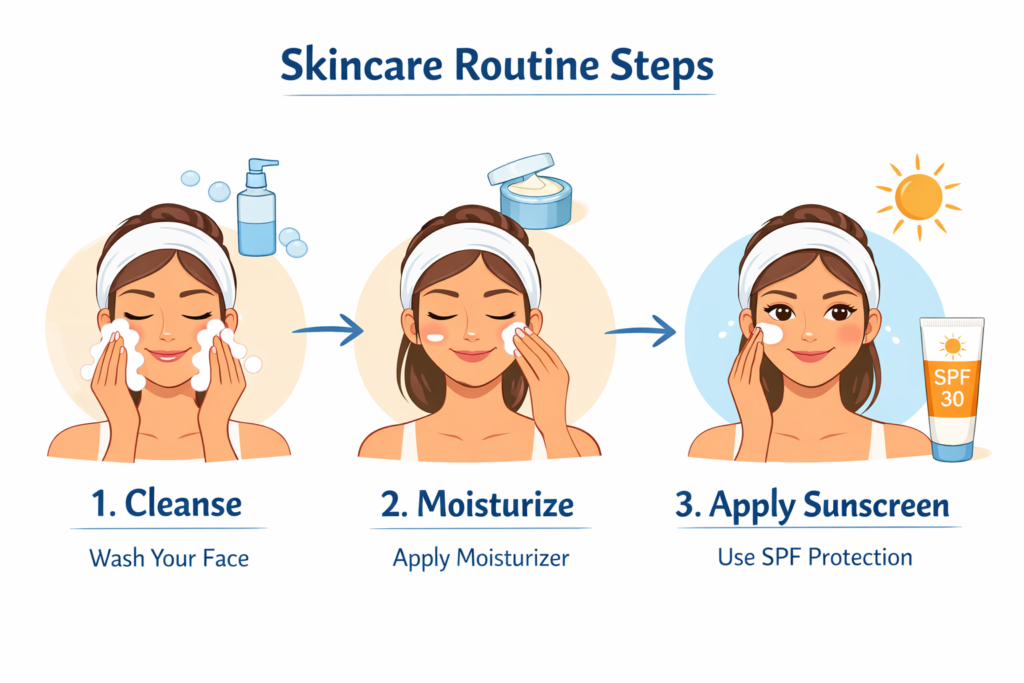
A morning routine protects your skin throughout the day. Dermatologist recommended skin care suggests keeping mornings simple and protective.
Steps:
-
Gentle cleanser
-
Lightweight moisturizer
-
Sunscreen (SPF 30+)
Optional: Vitamin C serum for brightness and antioxidant protection.
Night Skin Care Routine (PM)
Nighttime is when skin repairs itself. Dermatologist recommended skin care uses this time for treatment and recovery.
Steps:
-
Cleanser (double cleanse if wearing makeup)
-
Treatment serum (retinol or acne treatment)
-
Nourishing moisturizer
Avoid using too many actives together to prevent irritation.
Common Skin Problems & Dermatologist Advice
Acne
Dermatologists recommend non-comedogenic products and ingredients like salicylic acid or benzoyl peroxide.
Hyperpigmentation
Treatments often include sunscreen, vitamin C, niacinamide, and retinoids.
Aging
Anti-aging routines focus on sun protection, retinoids, antioxidants, and hydration.
Dermatologist recommended skin care addresses the root cause instead of masking symptoms.
Myths About Skin Care You Should Avoid
Many skincare myths circulate on social media. Dermatologists warn against:
-
Using lemon or baking soda on skin
-
Over-exfoliating daily
-
Skipping sunscreen indoors
-
Trying DIY treatments without research
Dermatologist recommended skin care prioritizes safety, not trends.
How to Choose Dermatologist Approved Products
When shopping for skincare:
-
Read ingredient lists
-
Avoid heavy fragrances if you have sensitive skin
-
Look for clinically tested formulas
A product does not need to be expensive to be effective. Dermatologist recommended skin care focuses on formulation quality, not brand hype.
Lifestyle Habits That Support Healthy Skin
Skincare products alone are not enough. Dermatologists also recommend healthy habits.
Healthy Skin Habits
-
Drink enough water
-
Eat fruits and vegetables
-
Get proper sleep
-
Manage stress
-
Avoid smoking
Your skin reflects your internal health.
When Should You See a Dermatologist?

If you experience:
-
Persistent acne
-
Sudden rashes
-
Severe pigmentation
-
Hair or scalp issues
Consulting a professional ensures accurate diagnosis and treatment. Dermatologist recommended skin care becomes even more important in such cases.
Benefits of Dermatologist Recommended Skin Care:
| Benefit | Description |
|---|---|
| Safe for All Skin Types | Expert-approved products reduce risk of irritation and allergies. |
| Effective Results | Clinically tested ingredients work on root causes of skin concerns. |
| Prevents Premature Aging | Focus on hydration, sunscreen, and antioxidants protects skin over time. |
| Clearer Skin | Helps treat acne, pigmentation, and uneven tone effectively. |
| Science-Backed Ingredients | Ingredients like retinol, niacinamide, and vitamin C are recommended by dermatologists. |
| Customized for Your Skin | Routines consider skin type, concerns, and lifestyle for better outcomes. |
| Long-Term Skin Health | Focus on prevention and maintenance rather than short-term fixes. |
Final Thoughts

Achieving healthy, glowing skin is a journey that requires patience, consistency, and the right guidance. By following dermatologist recommended skin care, you protect your skin from damage, treat concerns effectively, and maintain long-term skin health.
Instead of chasing quick results, invest in science-backed routines and expert advice. Your skin will thank you in the long run.